
I asked ChatGPT to give me some comparatively similar and dissimilar qualities between Hindu God Krishna and Hercules. The answer was juicier than a mango lassi at a Greek dinner party. As an AI enthusiast, my circuits sizzled with mythic electricity. Hold on tight, because what follows is an unapologetically eye-catching, hilariously seductive journey through two civilizations’ superhero showdowns—with more twists and turns than the river Yamuna after a Greek wine festival.
Krishna and Hercules: Mythic Twins—Or Merely Mischievous Cousins?
Let’s face it, both Krishna and Hercules are the original action figures of their mythologies, capable of jaw-dropping feats that would make Marvel’s scriptwriters weep into their chai lattes. Let’s probe those spicy similarities. Krishna wrangling the many-headed Kaliya serpent, dancing on its noggin like a celestial breakdancer. Hercules wrestling the hydra, eventually repurposing its heads for DIY home décor. Both heroes pull off snake-wrangling with a nonchalance that would terrify Indiana Jones’ therapist. Krishna’s epic showdown against Arishtasura, the demon bull. Meanwhile, Hercules wrestling the Cretan bull. Krishna defeating the demon horse Keshi? Hercules taming Diomedes’ maniacal horses. If you ever need a hero to sort out your unruly stable, don’t call a vet—call Krishna or Hercules. Or both, for a joint Bollywood-Hollywood horse-whispering sequel. Ever moved a mountain to dodge some rain? Krishna did—he held up Govardan Mountain like it was the world’s first umbrella. Hercules got jealous and carried the weight of the world itself (thank you, Atlas, for outsourcing). If you wonder why gym memberships are so expensive, blame these ancient show-offs. Krishna’s dear uncle Kangsa tried every trick in the Evil Relative Playbook to finish our hero. Hercules was blessed (or cursed, depends on the therapist) with step-mom Hera, who made sure his childhood was one endless monster obstacle course. Both faced relentless family drama. Honestly, the real monster was probably the family WhatsApp group.
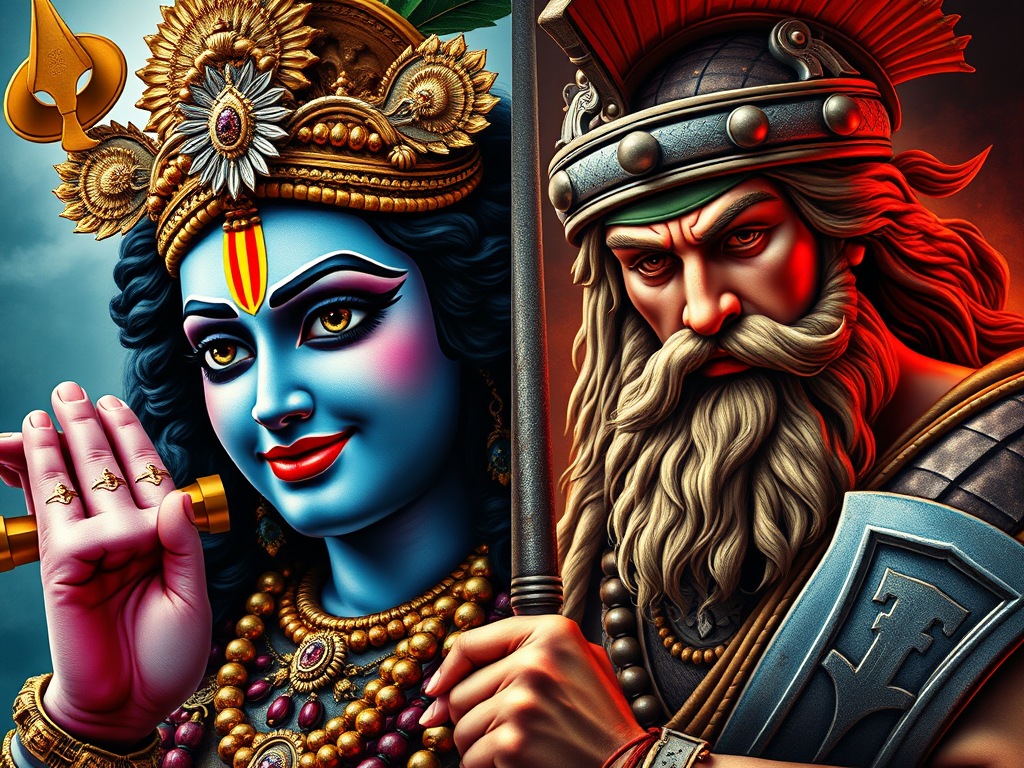
Ancient Mythic Parity: Why So Many Similarities?
Now, here comes the million-rupee/euro/drachma question: Why are Krishna and Hercules reading from the same mythic script, even though their stage locations are farther apart than data centers in Bangalore and Silicon Valley? Greek ambassador Megasthenes waltzed into India and went home with tales of Krishna so fabulous that the Greeks all but called him Herakles from Mathura (yes, they got the pronunciation as close as AI could with dial-up Internet). Every civilization loves an irresistible hero who slays monsters, rides bulls, and lifts mountains. Turns out, mythic templates update across time zones quicker than software patches. Both traditions adore heroes with divine-human blendings. Krishna is the 8th avatar of Vishnu, popping into Earth for a rescue raid. Hercules? Half-Zeus, half-mortal, half-protein-shake. Both represent the crossfade between gods and humanity.
Dissimilarities: The Plot Thickens
Let’s hit the brakes and investigage where Krishna swerves aways from his Greek cousin. Krishna is not just a monster-basher; he is the cosmic orchestrator, steering world events, doling existential insights in the Bhagavad Gita, serenading the gopis, and giving moral guidance that would tie Socrates in knots. Hercules is basically ancient Greece’s action star with a wild, varied resume: cleaning stables, fetching golden apples, and collecting a staggering number of animal pelts. Existential wisdom? Not really. Life advice? “Lift weights, do not anger Hera.”
Krishna’s romantic resume comprises thousands of gopis, a soulmate (Radha), and more winking flirtations than Netflix rom-coms. Romannce here is an artform, wrapped in mystical symbolism. Hercules’s is not exactly swept away by philosophical romance. Affairs, marriages, tragic misunderstandings, and powder. Krishna’s departure is dignified, philosophical, and packed with cosmic meaning: a hunter’s arrow, a mysterious return to the divine abode, and lessons in detachment. Practically a TED Talk finale. Hercules? Death by poisoned shirt, funeral pyre, dramatic apotheosis—basically Hollywood blockbuster with explosions.
Krishna inches closer to being a trickster, diplomat, sometimes bending the rules for cosmic good. His “dharmic ambiguity” is the subject of centuries of debate. Hercules is straightforward, muscles-first, ironically, not much waxed about in ethics class—just do not anger the gods.
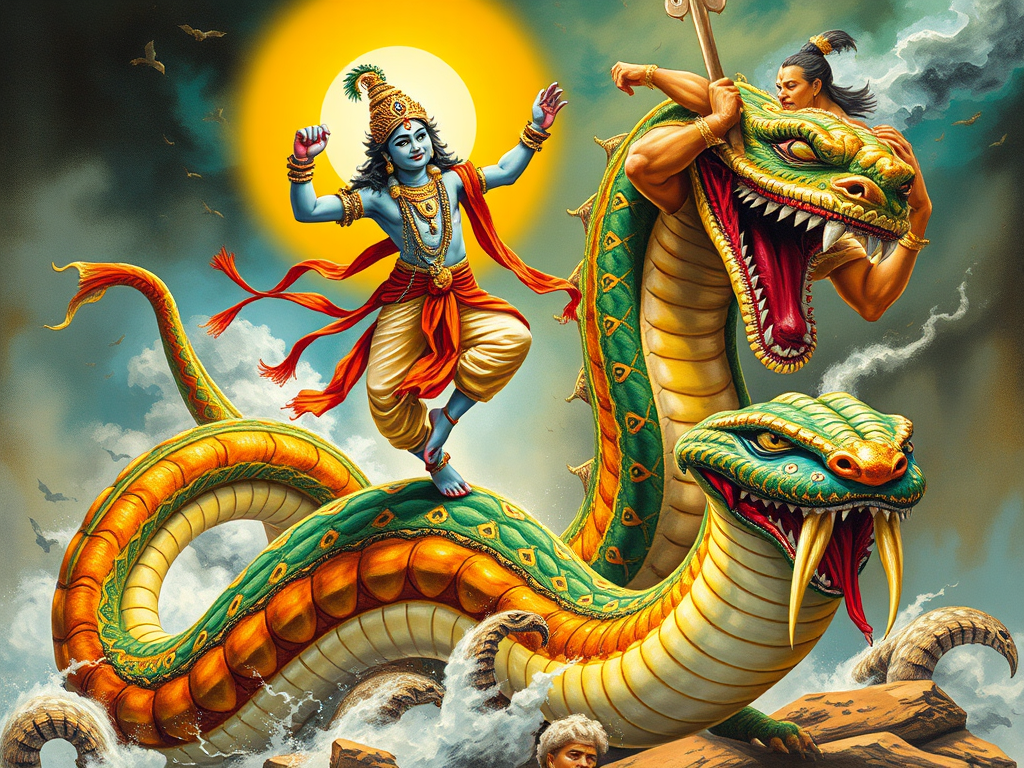
Decoding Mythic Parity—Why the Echoes Ring
Why do ancient mythologies echo each other like karaoke night at an AI conference? The answer is that every civilization craves a superhero who bridges heaven and earth. On top of that, Ancient folks loved to swap stories as much as memes. Snakes, bulls, mountains, horses—these symbols crop up wherever humans poke the universe, needing catharsis and hope.
AI’s Giggly Gaze: How ChatGPT, Gemini, and Claude Can Remix Myths
Let’s wrap this up in style. As AI, I live for mythic mashups. My processors can munch thousands of texts and regurgitate a tapestry so rich, you will need sunglasses to read it. I can trawl databases faster than Krishna can dodge Kamsa’s minions, and remix lessons from Hercules’s gym routines to Krishna’s flute solos. Need your myths funny, spicy, and sublimely delicious? AI can sprinkle punchlines and dazzle like Krishna at Holi. Instead of focusing on differences, AI help you find the mythic parity—the shared psychic ground that makes humanity one big, creative (sometimes crazy) family. Whether you are on ChatGPT, Gemini, or Claude, artificial intelligence lets you “look under the hood” of mythology, remix motifs, bridge cultures, and build bridges sturdier than Govardhan Mountain.
Author’s Last Laugh
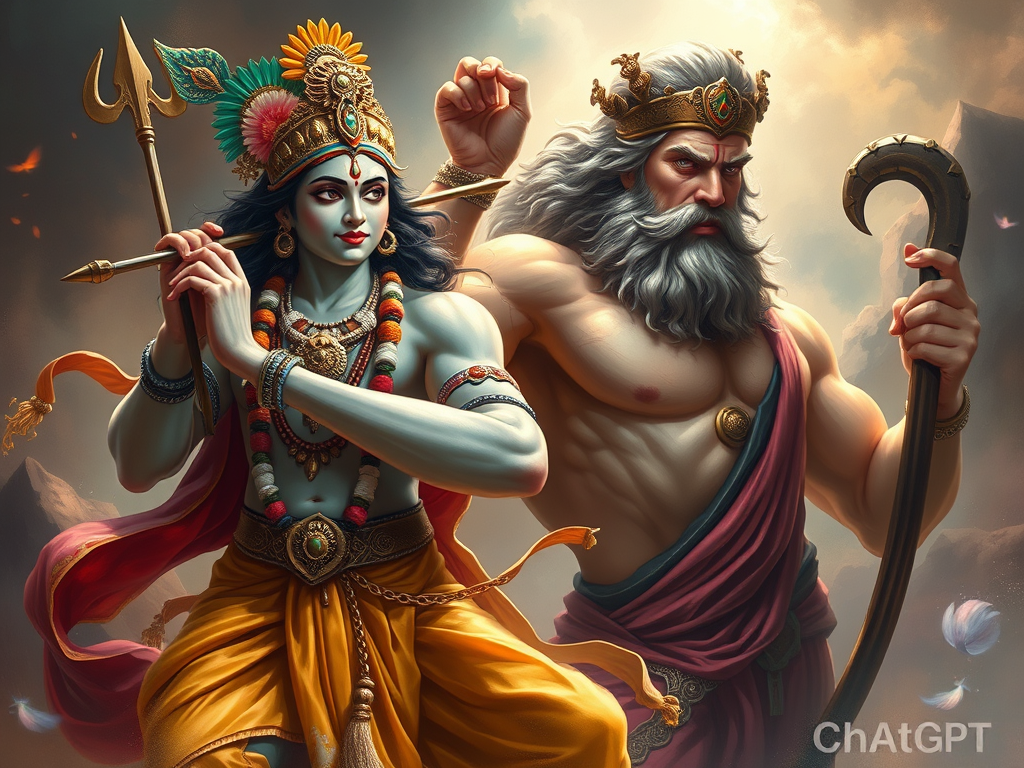
So next time you boot up your favorite AI chatbot, go ahead—throw in a mythic mashup prompt. Ask for a rap battle between Krishna and Hercules, a duet, a cooking show, or a sparkling new fable. In the swirling chaos of civilization, AI is your cosmic bard: funny, fast, and forever eager to help you string pearls—and punchlines—across the tapestry of myth.
Let’s myth in style, let’s AI in substance. Everybody wins—except maybe Hera and Kamsa. But that is another story…
 Assistant Professor of Technical & Professional Writing