Affordances of IgniteAgent: My Super-Simple Observations on Using Agentic AI in Canvas

Affordances of IgniteAgent: My Super‑Simple Observations on Using Agentic AI in Canvas

When I first heard the phrase “agentic AI” I imagined a tiny digital butler, tuxedo‑clad, whisking through my virtual office, polishing assignments, refilling coffee cups (or at least the metaphorical ones), and whispering gentle reminders about overdue grades. Fast forward a few weeks, and I’m now living with IgniteAgent, the newest brainchild of the Canvas ecosystem, and I’ve got a front‑row seat to its uncanny ability to turn chaos into choreography. Below is my field report—supersimple, supersmart, and, yes, supersuasive—on how this little marvel is reshaping the life of an engineering communication instructor (that’s me) and, by extension, the whole learning‑management circus.
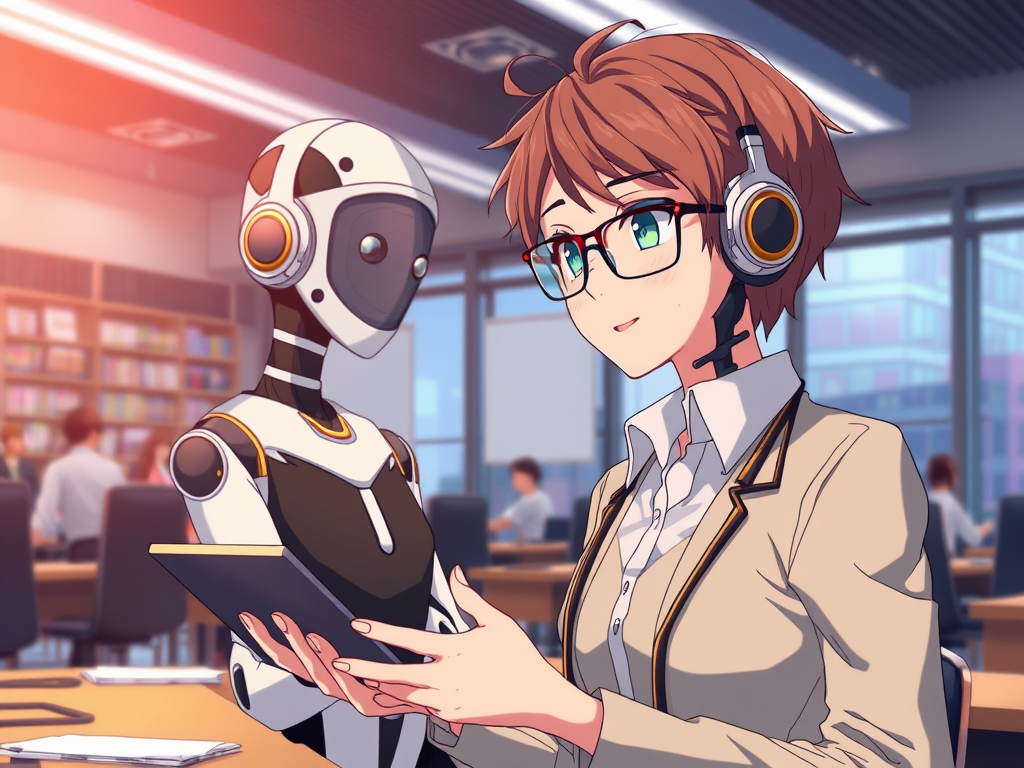
The “What‑Now‑Why‑How” of IgniteAgent

Before we dive into anecdotes, let’s get the basics out of the way. IgniteAgent is an agentic AI layer that sits atop Canvas, constantly monitoring, interpreting, and acting on data streams—course announcements, assignment submissions, discussion posts, calendar events, you name it. Unlike a static chatbot that waits for you to type a question, IgniteAgent proactively suggests actions, automates repetitive tasks, and even nudges students toward better learning habits. Think of it as a digital co‑pilot: you’re still steering the plane, but the co‑pilot handles the checklists, monitors turbulence, and occasionally cracks a joke over the intercom. The result? You spend less time wrestling with admin drudgery and more time doing what you love—teaching, mentoring, and maybe, just maybe, enjoying a lunch break that isn’t a sandwich‑in‑the‑office‑drawer affair.

Supersimple Automation: The “Set‑It‑and‑Forget‑It” Paradigm

My first love affair with IgniteAgent began with assignment grading rubrics. In an engineering communication class, I give students a mix of technical reports, oral presentations, and peer‑review critiques. Traditionally, I’d spend hours copying rubric criteria into Canvas, then manually adjusting scores after each submission. With IgniteAgent, I simply upload a master rubric once, tag the rubric with keywords (“technical clarity,” “visual storytelling”), and let IgniteAgent auto‑populate the rubric for every new assignment that matches those tags.The AI detects the assignment type,  and basic language metrics. I only need to fine‑tune the final numbers—a process that now takes minutes instead of days. The supersimple part? I never touch code, never learn a new scripting language. All configuration happens through an intuitive drag‑and‑drop UI that feels like arranging sticky notes on a whiteboard. If I ever get lost, IgniteAgent pops up a friendly tooltip: “Hey Shiva, looks like you’re trying to apply a rubric to a discusion post—did you mean a peer‑review matrix?” It’s like having a seasoned teaching assistant who knows my workflow better than I do.

Supersmart Insights: Turning Data Into Pedagogical Gold

Automation is great, but the real magic lies in insight generation. IgniteAgent continuously crunches data from three main sources: student interaction logs (clicks, time spent on resources); submission metadata (file types, revision counts); discussion sentiment analysis (tone, keyword density). From these streams, it surfaces actionable dashboards that answer questions I didn’t even know I had:

InsightHow It Helps Me
30% of the class never opened the effective visuals moduleI send a targeted reminder, embed a short video, and watch engagement jump to 70%
Students who submit drafts earlier tend to score 12% higher on final reports.I create a early-bird badge and see a 15% increase in early submissions.
Discussion sentiment dips after week 4.I schedule a live Q & A to address mounting confusion, smoothing the sentiment  curve.

These aren’t just pretty graphs; they’re decision‑making levers. By reacting to real‑time signals, I can adapt my syllabus on the fly, allocate office‑hour slots where they’re needed most, and even personalize feedback. Imagine telling a student, Your draft shows strong technical depth, but your visual layout could use a splash of color—here’s a quick guide.” That level of granularity used to require manual review of each document; now IgniteAgent flags it for me automatically.

Supersuasive Communication: The AI as a Persuader

Engineering communication isn’t just about equations; it’s about persuasion—convincing stakeholders, drafting clear proposals, delivering compelling presentations. IgniteAgent helps me teach this subtle art in thre ways:

  1. Narrative Templates – The AI suggests story arcs (“Problem → Solution → Impact”) when students outline reports. It highlights missing elements (e.g., “Where’s your value proposition?”) and offers concise phrasing options.
  2. Rhetorical Scoring – By analyzing sentence structure, active voice usage, and rhetorical devices, IgniteAgent assigns a “Persuasion Score” alongside the technical grade. Students instantly see that a well‑structured argument can be as valuable as a flawless calculation.
  3. Peer‑Review Coaching – When students critique each other’s work, IgniteAgent provides a checklist of persuasive techniques to look for, turning peer review into a mini‑workshop on rhetoric.

The result? My class discussions have shifted from “Did you get the right answer?” to “How did you convince the reader?” The AI subtly nudges both me and my students toward a more holistic view of communication, where clarity and influence walk hand‑in‑hand.

The Human‑AI Partnership: Trust, Transparency, and Tinkering

No technology is a silver bullet, and I’m quick to admit that IgniteAgent sometimes over‑generalizes. Early on, it flagged a perfectly valid technical term as “jargon overload” because the word appeared frequently in a niche subfield. Rather than blindly accepting the suggestion, I tweaked the AI’s sensitivity settings, teaching it that in this context the term is essential, not excessive. Transparency is baked into the system: every recommendation comes with a confidence meter and a rationale snippet (“Based on 150 prior submissions, this phrase tends to lower readability scores”). This lets me decide whether to accept, reject, or modify the advice. Over time, the AI learns from my choices, becoming a personalized tutor for my own teaching style.

Trust also hinges on privacy. IgniteAgent processes data within the secure confines of Canvas, respecting the same end‑to‑end encryption that Proton is famous for. I never see raw student files; I only see aggregated insights. That peace of mind lets me focus on pedagogy rather than data‑governance headaches.

 From Chaos to Canvas: A Day in the Life (Post‑IgniteAgent)

Here’s a snapshot of a typical Monday now that IgniteAgent is my co‑pilot:

  • 8:00 am – Dashboard lights up with a gentle ping: “10% of students haven’t accessed the ‘Storyboarding’ resource.” I drop a quick 30‑second video teaser into the announcement bar; the access rate spikes within the hour.
  • 9:30 am – While reviewing draft reports, IgniteAgent highlights three submissions with low visual‑clarity scores. I add a comment, “Try using a consistent color palette—see the attached cheat sheet.”
  • 11:00 am – Live lecture begins. IgniteAgent monitors chat sentiment; halfway through, it alerts me, “Sentiment dip detected—students seem confused about the audience analysis section.” I pause, open a poll, and clarify the concept.
  • 2:00 pm – Office hours. Students receive personalized “next‑step” suggestions generated by IgniteAgent based on their latest drafts. One student smiles and says, “I finally know exactly what to improve!”
  • 4:00 pm – End of day. I glance at the weekly “Persuasion Score” trend line—up 8% from last week. I jot down a note to expand the rhetorical template library next month.

All of this feels effortless because the heavy lifting—data aggregation, pattern detection, reminder scheduling—is handled by the AI. I’m left with the human parts: empathy, nuance, and the occasional witty remark that keeps students engaged.

The Bigger Picture: Why Agentic AI Matters for Higher Ed

IgniteAgent is a microcosm of a broader shift: moving from static LMS platforms to dynamic, learning‑centric ecosystems. Traditional LMSs are repositories—places to dump syllabi, grades, and PDFs. Agentic AI transforms them into learning partners that anticipate needs, surface insights, and personalize pathways. For engineering communication courses, where the blend of technical rigor and expressive skill is delicate, this partnership is priceless. It ensures that technical precision isn’t sacrificed for storytelling, and vice versa; feedback loops are rapid, data‑driven, and scalable; and student agency is amplified—learners see concrete evidence of how their actions affect outcomes. In short, the AI doesn’t replace the instructor; it augments the instructor’s capacity to nurture both the engineer’s mind and the communicator’s heart.

Final Thoughts: Embrace the Agent, Keep the Soul

If you’re an instructor staring at a mountain of Canvas tabs, wondering how to keep up with grading, engagement, and curriculum tweaks, my advice is simple: let the agent do the grunt work, and you do the soul work. IgniteAgent (or any comparable agentic AI) excels at repetitive, data‑heavy tasks. Your expertise shines when you interpret insights, craft compelling narratives, and connect with students on a personal level. Remember, the AI is only as good as the prompts you give it and the trust you place in its recommendations. Treat it like a well‑trained apprentice—guide it, correct it, and celebrate its wins. Before long, you’ll find yourself with more time for research, creative lesson design, or—dare I say it—actually taking a coffee break without guilt. So here’s to a future where Canvas isn’t just a digital filing cabinet, but a living, breathing classroom assistant. May your rubrics be ever‑ready, your dashboards ever‑insightful, and your students forever inspired.


AI Snake Oil: Why I Stopped Trusting the Magic Show

I will tell you something that might sound silly at first: I used to believe in AI the same way people believe in unicorns, or diet pills, or that weird machine on late-night TV that promises rock-hard abs while you sit and eat chips. I believe that AI would save me time, make me smarter, polish my writing, analyze my research, help my students, and probably teach my classes while I napped. I really believed that. But here is the truth: it did not. It does not. And I am here to say it loud—I have stoped drinking the AI Kool-Aid, and guys, was it spiked with some sweet, slippery snake oil. See, AI came dressed up in a glittery jacket, threw around words like ‘efficiency,’ ‘automation,’ and ‘pedagogical revolution’ and made a lot of us clap like excited seals. I clapped too. Who would not want a shiny machine that could write lesson plans, grade essays, generate research questions, summarize books, cite sources, and whisper sweet academic nothings in your ear while you eat leftover spaghetti in front of a blinking cursor? But after the sparkle faded, I realized something: AI is not adding anything substantial to the real, deep, hard, delicious, frustrating, and soulful work of teaching or researching rhetoric. It’s like putting glitter on cardboard and calling it a Faberge egg.

Fig I: AI generated Image of a Unicorn that symbolizes epistemic purity and AI Snake Oil

Let me explain. I asked AI to help me brainstorm research questions. It gave me 10 questions that sounded like they were copied from a textbook written by a robot who would never read a real book. “How does digital rhetoric influence online learning environments? Wow! Groundbreaking! My cat could think of that. And she cannot even use a mouse without getting distracted by the screen saver. I needed curiosity, I needed fire. I got tepid bathwater. Then I asked AI to help me with student feedback. I thought maybe it could draft a few encouraging lines could personalize. What I got sounded like something from a sad greeting card factory where the writers had been replaced with soulless toasters. “Good job. Keep up the hard work.” Thanks. That’s the kind of thing that makes a student feel like a barcode. I tried to give AI a second chance. Maybe it was just having a bad data day. So I fed it more context. I told it the student was working on tone in professional emails. The response? “Try to be professional and use appropriate tone.” That’s like telling a chef, “Try not to burn it.” Thanks for the revolutionary insight. But I did not stop there. I went full nerd. I gave AI a complex rhetorical thoery prompt and asked it to draft a paragraph. What came back looked like a bored undergrad had Googled “rhetorical analysis” and copy-pasted the first paragraph of Wikipedia. I mean, sure, it had all the right words—logos, ethos, kairos—but it was all foam and no coffee. All bark, no bite. All sprinkle, no donut.

I began to wonder: what exactly is AI adding to the value chain of my research? Of my pedagogy? Of my rhetorical practice? The answer I arrived at—with a dramatic sigh and a slightly wilted sandwich in my hand—was: not much. Not yet. Maybe not ever. Because what I needed as a teacher, a writer, a thinker, a human—is not a sterile stream of regurgitated content. I need nuance. I need context. I need slowness. I need error. I need a student staring off into space, wrestling with an idea, and then lighting up like a firefly when it finally clicks. I need the mess. I love the mess. AI does not do mess. AI does averages. It smoothes everything out until nothing sticks. Nothing cuts. Nothing bleeds.

Let me say something that might get me kicked out of the 21st century: AI is not a collaborator. It is not a co-author. It is not a co-teacher. It is not a magical oracle of Delphi with a USB port. It is a calculator with a thesaurus. And sometimes it is a hallucinating calculator who makes up stuff and says  it with confidence, like that one kid in class who did not do the reading but still raises their hand. “But it is just a tool!” people say. Sure. So is a hammer. But if you use hammer to wash your dishes, your cups are going to cry. And that is the thing: AI is being used in the wrong rooms, for the wrong reasons, with the wrong expectations. We are asking it to inspire, to create, to feel, to reflect. But that is not what it does. What it does is imitate. And imitation, as far as I know, has never written a good poem, designed a good syllabus, or made a student feel truly seen.

Fig II: AI generated image of the Oracle

Let me give you a juicy example. I once asked AI to generate a short dialogue between Socrates ad Beyonce. Do not ask why. Just go with me. The result was a biege, baffling, boring exchange where Socrates said things like, “What is truth?” and Beyonce said, “Let’s empower women.” It was like watching a mime reenact philosophy night at Karaoke. No rhythm, no soul, no sass. Another time, I asked AI to help me generate metaphors for rhetoric. It gave me, I kid you not: “Rhetoric is like a bridge. It connects people.” Really? That is the best it could do? A bridge? I wanted fireworks. I wanted “Rhetoric is a mischievous racoon in a library of sacred scrolls.” Or “Rhetoric is a con artist with a PhD and a velvet tongue.” Something with some flair—some flavor—some garlic.  Instead, I got what AI always gives me: the blandest possible answer that no one will remember five minutes later.

So now, when someone says AI is transforming education, I tilt my head like a confused dog. Transforming it into what? A box of stale crackers? I am not saying AI can not do cool tricks. It can summarise articles. It can generate citations (sometimes fake ones, but hey, we have all had bad days). It can give you a to-do list. But so can a Post-it note. And Post-its do not pretend they are going to replace me. Because the magic of teaching—real teaching—is not just about information delivery. It is about relationship. It is about intuition. It is about awkward silences and big questions and the electric jolt when someome’s idea leaps off the page like it grew wings. AI can not do that. And let’s be honest, most of the time, it is not even trying.

The other day, a student told me, “I asked ChatGPT for help and it gave me a pretty good answer, but I still did not get it.” That is the whole point. Good teaching is not about answers. It’s about ways of thinking. It’s about questions that unravel you and slowly put you back together. AI does not know how to not know. It does not wrestle. It does not wonder. It just spits.

So I have decided: I am staying messy. I am staying human. I am keeping my sarcasm, my pauses, my sweaty palms, my failed metaphors, my joyful rambling, and my stubborn refusal to believe that a machine that has never loved or lost can teach anyone what it means to write well or think hard or care deeply. AI is fine for what it is—a tool. A digital Swiss army knife that sometimes forgets it is holding a spoon. But it is not the future of teaching. It is not about the soul of rhetoric. And it is definitely not the secret sauce of research. The sauce is still us: the long walks, the quiet mornings, the random napkin notes. The student who makes a joke that surprises you. The sentence that hits you so hard you stop and read it twice. That is real. That is deep. That is not artificial. That is the good stuff.

Therefore, let the AI talk. Let it type. Let it generate. I will be over here, with my pen, my paper, my voice, my students, my questions, and my beautiful, wild, irreducible human brain—doing the real work.

No snake oil is necessary.

Ghibli Images: Unlocking Thick Description in Ethnographic Research Methods

As a professor who has spent years guiding students through the intricacies of ethnographic research, I am searching for ways to make the elusive concept of ‘thick description’ resonate. While Clifford Geertz’s definition—rich, layered, and contextually embedded description—remains foundational, translating that into classroom practice can be a challenge. Enter the world of Studio Ghibli, and more recently, Ghibli-style AI image generation. These stunning, detail-rich visuals have become an unexpected yet powerful tool in my teaching toolkit, transforming how students grasp and practice thick description in ethnography.

Why Ghibli? The Power of Aesthetic Thick Description

Studio Ghibli’s films are renowned for their breathtaking visuals: every frame is meticulously hand-drawn, brimming with intricate details in both foreground and background. Whether it’s the moss creeping up an old stone wall in Spirited Away or the layered textures of a bustling market in Kiki’s Delivery Service, Ghibli’s images are more than just beautiful—they are immersive. They invite viewers to linger, notice, and interpret. This is, at its core, an exercise in aesthetic thick description.

As an educator, I see immediate parallels. Ethnography is about noticing—the mundane and the magical—and rendering it in such a way that outsiders can understand not just what is happening, but what it means. Ghibli images, with their lush greenery, weathered buildings, and nuanced lighting, model this process visually. They show, rather than tell, how to attend to layers of context, mood, and meaning.

From Visual Detail to Ethnographic Insight

When I introduce Ghibli-style AI images in my research methods classes, I ask students to ‘read’ the image as they would a field site. What do they see in the background? What small details suggest larger social dynamics? How does the use of color, light, and texture evoke a sense of place or emotional tone? This exercise is more than aesthetic appreciation—it’s a primer in ethnographic observation. For example, a Ghibli-inspired image of a rural village at dusk might include:

  • Faint lanterns glowing in windows, hinting at communal rituals.
  • Overgrown paths, suggesting the rhythms of daily life and neglect.
  • Children playing, animals resting, elders conversing—each a node in the social fabric.

Students quickly realize that to describe this scene thickly, they must go beyond surface description (‘a village at dusk’) and attend to the interplay of elements, the implied histories, and the emotional resonance. This is precisely what ethnographers strive for in the field.

AI as a Teaching Aid: Generating Scenes for Thick Description

The rise of AI tools capable of generating Ghibli-style images has taken this pedagogical approach to new heights. I can now prompt an AI to create a “bustling street market similar to scenes from Spirited Away, capturing a sense of wonder” or a serene Ghibli-style meadow evoking peace and nostalgia”. These images are not only visually stunning but intentionally crafted to include layers of detail, mood, and narrative.

Here is how I use them in class:

  • Observation Drills: Students receive a Ghibli-style image and are tasked with writing a thick description. They must capture not just what is visible, but the implied relationships, histories, and atmospheres.
  • Comparative Analysis: By providing several images with subtle differences (lighting, time of day, background activity), students practice noticing and articulating how context shapes meaning.
  • Story-building: Students infer possible narratives from the visual cues—who lives here, what are their rituals, what tensions or joys animate this place? This connects visual analysis to the core ethnographic skill of interpreting lived experience.

Ghibli’s Narrative Depth: More Than Just Pretty Pictures

Studio Ghibli’s storytelling method, rooted in techniques like kishotenketsu, emphasizes mood, atmosphere, and the unfolding of ordinary life alongside the fantastical. This aligns closely with ethnography’s commitment to capturing both the extraordinary and the everyday. Ghibli’s blend of realism and fantasy, it’s attention to multispecies relationships, and its sensitivity to place and space offer a model for the kind of “storied experience” that thick description aims to convey.

When students engage with Ghibli-style images, they learn to see the field site as layered and alive, full of stories waiting to be uncovered. They become attuned to the “politics of place and space,” the subtle interplay of human and nonhuman actors, and the emotional undertones that shape social worlds.

Bridging Subjective and Objective: Ethnography as Art and Science.

One of the enduring tensions in ethnographic research is balancing objective observation with subjective immersion. Ghibli images, with their evocative artistry, encourage students to embrace both. They must record what they see (objective) but also reflect on how the scene makes them feel, what memories or associations it stirs (subjective). This mirrors the practice of participant observation, where researchers combine disciplined recording with personal involvement to achieve richer, more accurate interpretations.

In my classroom, this means encouraging students to write in the first person, to acknowledge their own presence and perspective as they describe the scene. This self-reflexive approach, inspired by “new ethnography,” helps students see themselves as both observers and participants, insiders and outsiders.

From Image to Fieldwork: Lasting Lessons

The ultimate goal is to transfer these visual and narrative skills to real-world ethnography. After practicing with Ghibli-style images, students report feeling more confident in their ability to notice and describe the complexity of actual field sites. They learn to look for the small details—a cracked teacup, a faded family photo, a stray cat—that speak volumes about culture, history, and meaning. Ghibli images thus serve as both inspiration and training ground. They remind us that thick description is not just about piling on details but about rendering a scene so vividly that readers (or viewers) can feel its texture, mood, and significance.

Conclusion: The Ghibli Effect on Ethnographic Pedagogy

Incorporating Ghibli-style AI aesthetics into my teaching has transformed the way I introduce thick description and ethnographic research methods. These images offer a compelling, accessible entry point into the art of noticing, interpreting, and narrating social worlds. They bridge the gap between the visual and the textual, the objective and the subjective, the mundane and the magical.

For anyone teaching or learning ethnography, I cannot recommend this approach highly enough. Ghibli images are more than just beautiful—they are exercises in seeing, feeling, and understanding deeply. And that, ultimately, is what thick description is all about.

AI Overview Killed My Curiosity (And Maybe Yours Too)

Remember when googling something used to feel like cracking open a door to a whole new world?

Let’s rewind a bit—say, ten years ago. You are sitting at your desk, wondering, “Whey do cats purr?” So, you type it into Google. But instead of getting one tidy answer, you get a buffet of links. You click on a blog written by a vet who adores cats. That blog leads you to a research article. That article makes you curious about animal communication. You read a few Reddit threads where people argue about whether cats are manipulating humans. Then you watch a five-minute YouTube video narrated by a guy with a British accent. Now, somehow, you are reading about tigers, and next thing you know are learning that purring is possibly a form of healing.

Two hours later, you are knee-deep in animal behavior theories, evolutionary biology, and ancient Egyptian art. And you feel…satisfied. Not just because you found the answer, but because you earned it. You explored. You got surprised. You did not just grab info—you lived with it for a while. That’s what learning used to feel like. It was a ride.

Now? It’s Just a Pit Stop

Today, I Google the same question—“Why do cats Purr?”—and boom, AI Overview gave me a neat little summary in bold font at the top of the page.

“Cats purr for a variety of reasons, including to communicate content, self-soothe, or aid in healing. This sound is produced through neural oscillations in the brain that send repetitive signals to the laryngeal muscles.”

I read it. I nodded. I closed the tab.

That’s it.

No rabbit holes. No detours. No surprises. No weird sceince blog with a bizarre theory that makes me laugh but also think, “Could this be true?”

And that, my friend, is the slow death of curiosity.

We’re Getting the Answers, But Losing the Adventure

AI overviews are like fast food for the mind. They are hot, ready, and convenient. We don’t even have to lift a finger (well, maybe one finger to scroll). And in many ways, they are incredible. Don’t get me wrong—technology that can summarize twenty articles into one clean paragraph? That’s impressive. But here is the thing: we humans were not built to live off summaries. We grow through effort. We learn by digging. We remember the things we worked for. AI gives us the answer, sure, but it skips the most important part: the journey. And let’s be real—the joy is in the chase.

Ever Asked a Question Just to End Up Somewhere Completely Different?

This happened all the time when I explored without shortcuts. I Googled “How did the Eiffel Tower get built?” and suddenly I were reading about the rivalry between Gustave Eiffel and other architects, then about Paris in the 1880s, then about the World’s Fair, and then about how people hated the tower at first. I found a personal blog of a woman who lived in Paris for a year and hated the view from her window because “that dumb metal thing ruined the skyline”. I laughed. I learned. I remembered. But with AI overview? I got a couple of neat facts in under ten seconds. “Constructed in 1887-1889, the Eiffel Tower was designed by Gustave Eiffel’s engineering company for the 1889 Explosition Universelle.” Cool. But…that’s it? Where’s the story? Where is the tension, the drama, the irony, the unexpected? I did not find that answer. It was handed to me. And that makes all the difference.

Information Without Involvement

Here is the real issue: AI Overview makes information feel transactional. You ask. It answers. Done.

But learning has never really worked like that. It’s messy. Its emotional. It’s full of dead ends and detours and contradictions. That’s what makes it stick. Think back to when you were a kid and had to do a school project. Maybe you went to the library. Maybe you had to open five different books to find the facts you needed. It was frustrating—but also exciting. When you finally found the right quote, or the perfect image, or that one paragraph that made your topic come alive—you felt a little spark. Compare that to now: you copy and paste a summary. You do not even need to read the whole article. Heck, most people do not even make it past the first link.

We are turning into passive takers of information. Scrollers, not thinkers. Downloaders, not diggers.

Our Brains Love Shortcuts. And That’s the Problem

Let’s not sugarcoat it: our brains are lazy. That’s not an insult—it’s biology. The brain’s main job is to conserve energy. That’s why we love automation. It’s why we keep eating chips even though we said “just one more.” It’s why we click the first link and call it a day. AI Overview is custom-built for this tendency. It delivers quick satisfaction. But satisfaction without engagement is hollow. It’s like eating cotton candy—tastes sweet, but disappears before you even realize what happened.

The more we rely on AI to summarize for us, the less we exercise the parts of our brain responsible for critical thinking, curiosity, and memory. We stop asking follow-up questions. We stop wondering. We stop comparing sources. And slowly, we stop thinking for ourselves.

Ever Heard of “Cognitive Lethargy”?

It’s real thing. Not an official diagnosis, but a growing concern. It’s what happens when we get so used to being fed information that we lose the ability to wrestle with it. We become mentally sluggish. Not stupid, just…uninvolved. We start using words like “vibe” or “I think I heard somewhere?” instead of actually knowing. We forget faster. We feel less connected to the knowledge we absorb. This is not just a learning issue. It’s a living issue. Because how we learn is how we experience the world. If we stop engaging with information, we start engaing from everything else, too.

Okay, Let’s Talk About That Crayon Example Again

I mentioned this earlier, but let me dig in deeper because it’s too good not to. A friend of mine was helping her kid with a school project on the history of crayons. She Googled “When were crayons invented?” and, as expected, AI Overview gave her a neat, no-nonsense answer: Crayons were invented in 1903 by Binney & Smith.”. She repeated that to her kid. Done. But later, her kid asked, “Why 1903? And why did they start with just eight colors? And how did they pick the names?” She had no clue. So, she did the unthinkable: she kept searching. She clicked a few articles. Found a blog that talked about the original crayon color names—like “Maize” and “Carnation Pink”. She discovered that some old color names were changed because they were racially or culturally insensitive. She even watched a video about how crayons are made in factories today.

Now she was not just helping her kid. She was learning herself. She was excited. Later that night, she brought it up at dinner with friends. One of them used to collect vintage crayon boxes as a kid. They talked for 20 minutes. That’s what discovery looks like. Not just reading a sentence—but connecting with it.

More Examples? Oh, I Got ‘Em.

Example 1: Black Holes

I searched “What is a black hole?”

AI said: “A black hole is a region in space where the gravitational pull is so strong that nothing, not even light, can escape from it.”

Cool. But if  Had I dived deeper, I might have found mind-blowing stuff: time slows down near black hole. Some theories suggest they could lead to wormholes. There is a supermassive one at the center of our galaxy. And Stephen Hawking once joked about aliens using them as garbage disposals. None of that is in the summary. You have got to go digging.

Example 2: Bananas

Yep, bananas.

I Googled: “Are bananas good for you?”

AI said: “Bananas are high in potassium and a good source of fiber and vitamin B6.”

End of story?

No way. If we Click around and we will learn that the bananas we eat today are not even the original kind. The wild ones had seeds. The current banana—called the Cavendish—is in danger of going extinct because of a fungus. There is a global banana crisis happening right now, and most people have no idea.

Again: not in the overview.

So, What Can We Do?

Do not worry, this is not a “throw your phone in the river and go live in the woods” kind of rant. I am not anti-AI. I am just pro-curiosity. Here is what we can do to keep our minds sharp and our wonder alive:

  1. Scroll Past the Overview

Yes, the AI Overview is right there. It’s tempting. But resist. Pretend it does not exist. Click on something else. Let your eyes wander. That’s where the magic begins.

  • Follow the Weird

Find the blog that looks oddly specific. The Reddit thread with too many comments. The YouTube with a terrible thumbnail but surprisingly good content. Follow the trail.

  • Ask “What is Missing?”

Every summary leaves stuff out. Ask what’s not being said. Who’s behind the answer? What perspective is missing? This turns you from a reader into a thinker.

  • Talk About What You Learned.

Nothing makes knoweldge stick like sharing it. Tell a friend. Text a sibling. Post a little nugget on social. You will remember it way better, and you might even spark someone else’s curiosity.

In the End, It’s About Ownership

AI overviews can serve us information. But it cannot give us the thrill of discovering it ourselves. It cannot make us gasp, or laugh, or raise your eyebrows. It cannot give us that feeling of “Wait—how did I know this?!” Only we can do that. When we let ourselves get a little lost in learning—when we take our time and let curiosity lead—we are not just collecting facts. We are building connections. We are flexing our brain. We are staying alive inside.

So, Next Time You Google Something…

Skip the overview. Dive into the mess. Read more than one thing. Let a question lead to another. Let ourselves be confused. Let ourselves be amazed. Because when we fight for the answer—even a little—we own it. It becomes part of us. And maybe, just maybe, we will fall in love with learning all over again.