

Photo generated by AI that is embedded in the mechanism of WordPress
I have been thinking a lot lately about patterns. Not the kind you find on your grandmother’s favorite tablecloth, but the deeper patterns that connect how we make things—whether it’s a piece of fabric, a persuasive argument, or a line of code that teaches a machine to write poetry. Last week, I watched my niece struggle with her college application essay. She kept starting over, deleting paragraphs, rearranging sentences like puzzle pieces that would not quite fit together. “There has to be a better way to do this,” she muttered, and something clicked for me. I realized she was experiencing the same frustration that led Ada Lovelace to write the world’s first computer algorithm in 1843, and the same challenge that keeps me up at night as I try to understand how AI is reshaping the way we think about writing and persuasion.
The Thread That Connects Us All
I never thought I would find myself comparing my writing process to a weaving loom, but here we are. The Jacquard loom, invented in 1804, used punched cards to create intricate patterns in fabric. Each hole in the card told the loom what to do—lift this thread, lower that one, create this pattern, avoid that mistake. It was mechanical poetry, really. When Ada Lovelace saw Charles Babbage’s Analytical Engine, she recognized something the inventor himself had missed. She did not just see a calculating machine; she saw a pattern-making device that could work with symbols, not just numbers. In her famous Note G, she wrote what we now recognize as the first computer algorithm—a set of instructions for calculating Bernoulli numbers. But more importantly, she imagined a machine that could compose music, create art, and manipulate language.
I keep a copy of her notes on my desk, not because I am a computer scientist, but because her vision feels prophetic now that I am living through the AI revolution. She saw what we are experiencing today: machines that do not just calculate but create.
When I first Met an Algorithm
My first real encounter with algorithmic thinking happened in graduate school, though I did not recognize it at the time. I was studying rhetoric, trying to understand how persuasion works, when my professor assigned us to map out the structure of a particularly effective speech. “Break it down into steps,” she said. “What happens first? What triggers the next move? Where are the decision points?” I spent hours with color pens and sticky notes, creating what looked like a flowchart of persuasion. Start with shared values. Establish credibility. Present the problem. If audience is skeptical, provide evidence. If audience is emotional, tell a story. Build to the solution. End with a call to action. Looking back, I was creating an algorithm for effective rhetoric. I just did not know that’s what it was called.
The Secret Life of Writing Patterns
Here is something I have learned from spending six years teaching writing: we have always been algorithmic thinkers; we just called it something else. The five paragraph essay? That’s an algorithm. The hero’s journey? Algorithm. The way I structure this blog post—hook, development, conclusion—algorithm. But here is where it gets interesting. Traditional writing algorithms were human-centered. They assumed a human writer making conscious choices, weighing options, feeling their way through uncertainty. The writer was always in control, even when following a formula.
Computer algorithms changed everything. They removed the human from the loop or at least tried to. Instead of “Here is a pattern you might follow,” they said, “Here is what you will do, step by step, no deviation allowed.” I remember the first time I used a grammar checker that went beyond simple spell-check. It was the early 2000s, and Microsoft Word started suggesting not just corrections, but improvements. “Consider revising this sentence for clarity,” it would suggest, and I found myself arguing with my computer. “No, I meant it that way!” I would mutter, clicking ‘ignore’ with perhaps more force than necessary.
The Great Pattern Recognition Revolution
Fast forward to today, and I am having conversations with AI that can write in my style, analyze my arguments, and even finish my thoughts in ways that surprise me. Last month, I asked ChatGPT to help me brainstorm ideas for a difficult section of an article I was writing. It did not just give me a list of bullet points—it engaged with my thinking, built on my ideas, and pushed back when my logic was shaky. That’s when I realized something profound had happened. We had moved from algorithms that followed predetermined patterns to algorithms that could recognize, adapt, and create new patterns. It’s the difference between a player piano that can only play the songs on its rolls and a jazz musician who can improvise in response to the moment. This shift is revolutionizing writing studies in ways I am still trying to understand. My students now routinely use AI to generate first drafts, brainstorm ideas, and even simulate audience responses to their arguments. They are not cheating (well, not most of them); they are thinking algorithmically about the writing process in ways that would have been impossible just five years ago.
What Looms Taught Us About Teaching
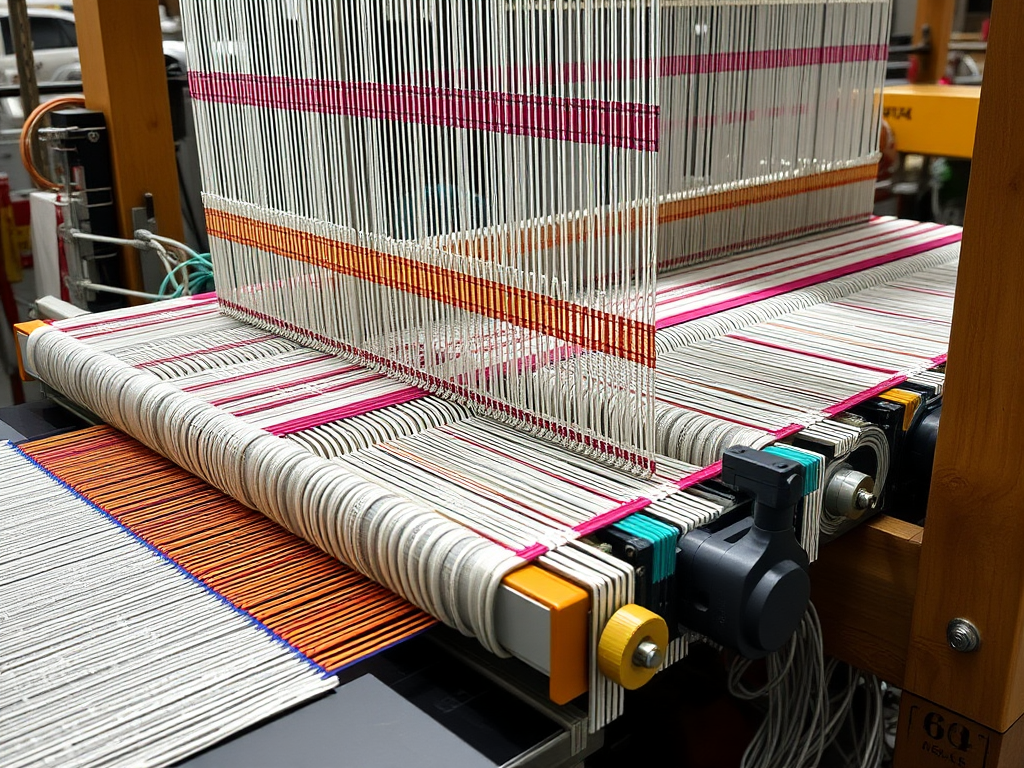
AI-generated image built by WordPress’s embedded Image-generating AI feature
The connection between weaving and computing is not just historical—it’s pedagogical. When I watch a master weaver work, I see the same kind of thinking that makes for effective writing instruction. They understand both the pattern and the variations, the rules and when to break them. Good weavers do not just follow patterns blindly. They understand why certain combinations of threads create strength, how tension affects texture, when a deliberate ‘mistake’ can create unexpected beauty. They are pattern thinkers who can work both systematically and creatively. This is exactly what I try to teach my writing students, and it’s what I think AI is teaching us about rhetoric more broadly. Effective communication is not just about following templates—it’s about understanding the underlying patterns of human connection and knowing how to adapt them to new situations.
The Algorithm That Changed My Mind
I used to be skeptical of algorithmic approaches to writing. They seemed too mechanical, too removed from the messy, human process of figuring out what you want to say and how to say it. Then I started experimenting with AI writing tools, not as a replacement for my own thinking, but as a thinking partner. I discovered that the best AI tools do not eliminate the human element—they amplify it. They help me see patterns in my own thinking that I might have missed. They suggest connections I had not considered. They push back when my arguments are weak or unclear. It’s like having a conversation with a very well-read friend who never gets tired, never judges your rough ideas, and always has time to help you think through a problem. The algorithm does not write for me; it writes with me.
Lessons from the Loom for the Age of AI
So what can writing studies and rhetoric learn from the invention of computer algorithms? I think there are three big lessons that are especially relevant as we navigate the AI revolution. First, patterns are powerful, but they are not everything. Both weaving and programming teach us that following a pattern is just the beginning. The real art comes in knowing when and how to deviate from the pattern to create something new. The best writers have always been pattern breakers who understand the rules well enough to know when to break them. Second, tools shape thinking, but thinking shapes tools. The Jacquard loom influenced how people thought about automated processes, which influenced early computer design, which influences how we think about writing today. But at each step, human creativity and intention shaped how those tools were used. We are not passive recipients of algorithmic influence—we are active participants in determining what that influence looks like. Third, collaboration between human machine intelligence might be more powerful than either alone. Ada Lovelace did not see the Analytical Engine as a replacement for human creativity—she saw it as an amplifier. Today’s best AI writing tools follow the same principle. They do not replace human judgment; they enhance it.
Looking Forward and Backward
I keep thinking about my niece and her college essay struggles. By the time she graduates, AI will probably be able to write application essays that are more technically proficient than anything she could produce on her own. But I do not think that makes her struggle meaningless. Learning to write is not just about producing text—it’s about learning to think, to organize ideas, to consider audience, to make choices about tone and structure and emphasis. These are fundamentally human activities, even when we use algorithmic tools to support them. The weaving loom did not make beautiful textiles obsolete—it made them more accessible and opened up new possibilities for creativity. The printing press did not eliminate good writing—it created more opportunities for good writers to reach audiences. I suspect AI will follow the same pattern.
The Thread That Holds It All Together
As I finish writing this (with the help of several AI tools for research, editing suggestions, and fact-checking), I keep coming back to something Ada Lovelace wrote in 1843: “The Analytical Engine might act upon other things besides number, were objects whose mutual fundamental relations could be expressed by those of the abstract science of operations.” She was talking about the possibility that machines could work with language, music, and art—not just numbers. She was imagining a world where alogoriths could be creative patterns, not just calculators. I think she would be fascinated by today’s AI revolution, but not surpirsed. She understood something that we are still learning: the most powerful algorithms are not the ones that replace human creativity, but the ones that enhance it, challenge it, and help us see new patterns in the endless complexity of human communication.

Image generated by AI built into WordPress’s blogging system
The thread that connects the weaving loom to today’s language models is not just technological—it’s deeply human. It’s our persistent desire to find better ways to create meaning, to share ideas, and to connect with each other across the spaces that separate us. In the end, that’s what both weaving and writing have always been about: taking individual threads—whether of cotton or thought—and creating something stronger, more beautiful, and more meaningful than the sum of its parts. The algorithm just helps us see the pattern more clearly.
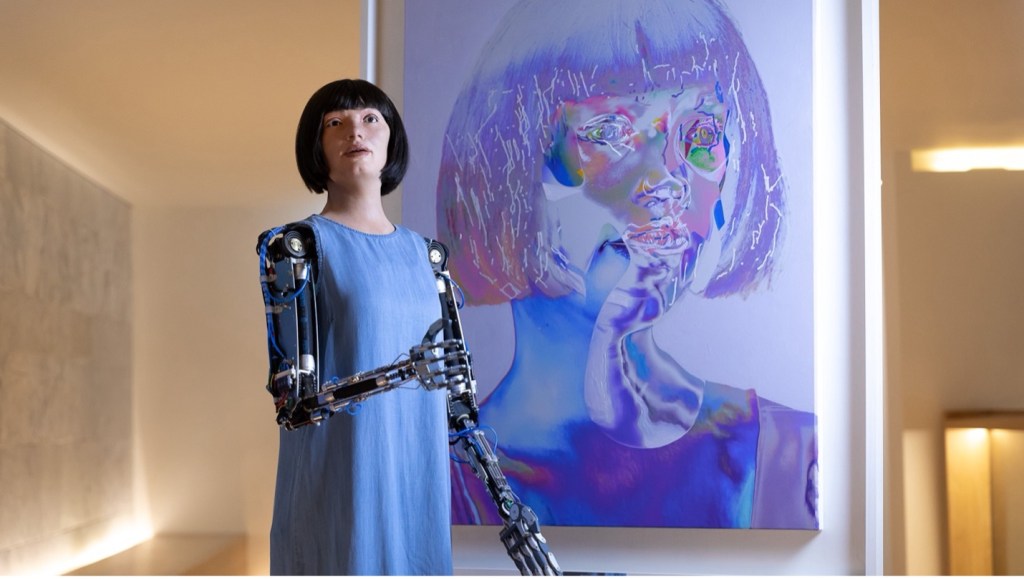
 Assistant Professor of Technical & Professional Writing