
Hi everyone! Let’s talk about AI—but let’s make it personal. I have been thinking a lot about artificial intelligence lately. Not just flashy stuff like ChatGPT or the wild images you can make with AI tools. I am thinking about where these AIs come from, what they learn, and more importantly, who they understand—and who they leave out. See, most of the popular AI tools we use today are made by big companies in the US and Europe. They are trained on data from the internet, and most of that data is in English. Most of it comes from Western websites, books, news, and cultural materials. That might seem fine at first glance, but here is the problem: these AIs end up seeing the world through a very Western lens. And that lens can be very narrow.
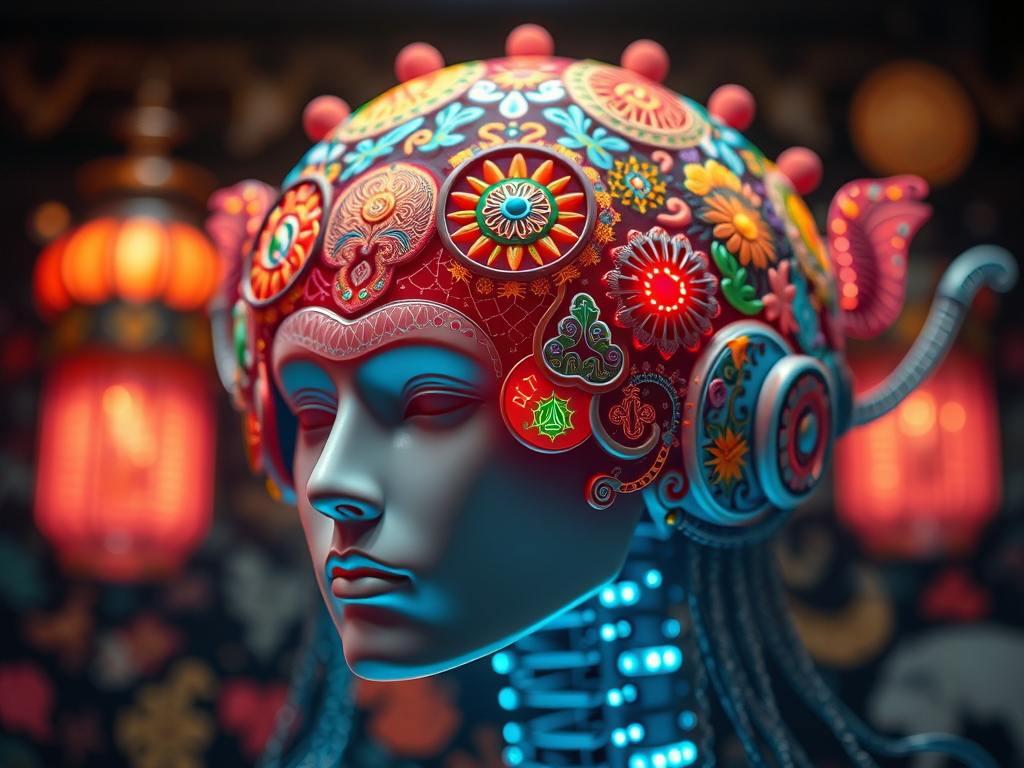
Let me tell you what I mean with a term that is kind of fancy but super important: technocolonial imaginary. Do not let the words scare you. This just means that AI models—especially the big Western ones—tend to imagine and present the world in ways that reflect colonial patterns of power and knowledge. Even without trying to, these AIs can push a worldview that says, “Western knowledge is universal,” or worse, “Western is better.” That makes me uncomfortable because I do not live in a Western fantasy. I live in a real world where people speak many languages, follow diverse customs, cook different meals, worship in different ways, and love in all kinds of ways. And I want AI to understand that world—not just repeat what it picked up from Silicon Valley blogs or Wikipedia.
Let me give you an example. I once asked a well-known Western AI model to write a story about a wedding in Nepal. What it gave me was something that sounded like it came straight out from a Hollywood movie: a white gown, a best man’s speech, a first dance to a pop song. It was not a bad story—but it was not my story. What about the vibrant saptapadi (seven steps), the smell of incense, the blessings from elders, the turmeric ceremony, or the way the bride’s hands are decorated with intricate mehendi? What about the songs sung by aunties, the jokes, the chaos, the joy? That story was nowhere to be found in the AI’s response. And that’s the heart of the problem. Most AI models are like really smart but culturally clueless tourists. They have read about your country in a guidebook, maybe learned a few greetings, but when it comes to the deeper stuff—your stories, your jokes, your pain, your pride—they just do not get it. But here is the good news. Things are changing. There is a growing wave of culturally responsive AI models. These models are being built in non-western parts of the world, trained on local languages, and designed to understand local values, traditions, and ways of knowing. They are not trying to be copies of ChatGPT or Bard—they are trying to be something new and better for the people they serve.

Let me introduce you to two of my favorites: DeepSeek from China and BharatGen from India. DeepSeek is developed in China. What makes it special is not just it speaks Chinese well (though it does). It is that it understands Chinese culture, literature, history, and daily life in a way that most Western AIs just cannot. I once asked DeepSeek to write a poem inspired by the classic Chinese poet Li Bai. The results were amazing—not just technically good, but emotionally rich and culturally resonant. It did not just throw in random Chinese-sounding phrases. It understood the symbolism, the pacing, the structure, and the melancholy that is so often in Li Bai’s poetry. Compare that to a Western AI that gave me something that sounded more like a tourist trying to imitate a kung fu movie. Here is the thing: culture is not just about language. It is about rhythm. Emotion. Silence. Color. Smell. Subtlety. When AI models are trained primarily on Western data, they miss all of that richness. They cannot smell the jasmine in a Chinese courtyard or feel the silence in a Zen garden. But Deepseek gets closer—because it is built from inside that world, not from the outside.

Now Let’s talk about BharatGen. India is a country of over a billion people, with more than 20 officially recognized languages and hundreds of dialects. The stories in Kerala are not the same as the stories in Punjab. The jokes in Bengal are different from the idioms in Tamil Nadu. The way people think, speak, argue, and create is so diverse. Western AI models? They usually struggle to get even one Indian language right. But BharatGen is different. It’s trained on Indian languages from the start—Hindi, Tamil, Telugu, Bengali, Marathi, Gujarati, and more. It knows local festivals like Pongal and Onam, not just Diwali. It can generate agricultural advice for a farmer in Odisha in Odia. It can help a student in Assam write a folk tale in Assamese. It does not just know India—it feels familiar.
Let me give you a tiny but powerful example. I once asked BharatGen to help generate a recipe for a simple South Indian sambar. Not only did it get the ingredients right (no, it did not suggest curry powder), it explained the steps in a way that reminded me of my grandmother. It said things like “temper the mustard seeds until they start to dance.” You do not learn that from Wikipedia. You learn that from life. You might be thinking, “Okay, that is nice for people in China or India, but why should the rest of us care? Well, we should care. Because these culturally grounded AIs are showing us that AI does not have to be one-size-fits-all. We do not have to settle for tools that erase our differences in the name of convenience or universality. We can have tools that celebrate our differences—and help us keep them alive.

When AIs are built with care, they can support local teachers, farmers, students, artists, and elders. They can protect endangered languages, record oral histories, teach rituals, and even help with mental health support in culturally appropriate ways. And here is something even deeper: by resisting the technocolonial mindset—the idea that Western ways of knowing are the default—we are reclaiming something powerful. We are saying, “Our ways matter. Our stories count. Our knowledge is real.”
Let’s zoom out for a moment. This is not just about cool features or better translations. This is about power. Who builds the AI? Who trains it? Who decides what is “normal” or “neutral”? These are questions about control. And for too long, the answers have been the same: big tech companies in California or London. But culturally responsive AI challenges that. It says: “We can build our own tools. We can tell our own stories. We can shape our own futures.” Think about it like food. Imagine if all the world’s restaurants were run by the same chef from New York. No matter where you went, you would get the same menu: burgers, fries, milkshakes. That might be fun for a day, but eventually, you would miss your mom’s cooking. You’s miss the smell of spices, the crunch of dosa, the heat of chili, the comfort of something familiar. That’s what Western AI has become—a global menu of the same dish. But we deserve more than that. We deserve variety. We deserve AI that tastes like home.
Now you might be wondering, “This sounds great—but what can I do?”
Well, I am glad you asked. Here are a few small but meaningful things:
- Support local AI projects: If you are in a country building its own AI tools, support them. Use them. Give feedback. Celebrate them.
- Ask better questions: Do not just accept answers from AI as neutral. Ask, “Whose perespective is this?” If it feels off, challenge it.
- Push for language inclusion: Whether you are a teacher, writer, or student—advocate for AIs that understand your local languages and dialects.
- Tell your own stories: Write. Share. Create. The more cultural content we put out there, the more we can train future AI to understand us better.
- Talk about it: Share blogs like this. Talk to your friends. Make this conversation part of everyday life.
So when I imagine the future of AI, I am not dreaming of flying robots or instant translations. I am dreaming of something simpler and more beautiful: An AI that helps a child in Ghana write a folk tale in Twi; An AI that understands Navajo syntax and can preserve it for the next generation; An AI that can help a weaver in Blangladesh design patterns that blend tradition with innovation; and An AI that does not understand you—but respects you. That’s not science fiction. That’s possible. That’s happening. And it’s happening because people all over the world are saying, “We want AI that feels like us.”
Let’s resist the technocolonial imagination, not with anger but with creativity. Let’s support BharatGen, DeepSeek, and every other AI that is trying to see the world through many eyes, not just one. Because AI does not have to erase our differences to be useful. In fact, the more it reflects our differences, the more powerful—and beautiful—it becomes. And the next time you use AI, ask it a question only your culture can ansewr—and see if it gets it right. If it does not, it is time to try a new kind of AI—one that speaks your language, and one that gets you.
 Assistant Professor of Technical & Professional Writing